
By La Trecia Doyle-Thaxton aka ReikiRaEss
Living with fibromyalgia can make you feel as though your entire life has been reduced to symptoms, appointments, test results, and prescriptions.
Pain becomes a number on a chart. Fatigue becomes something you are expected to push through. Brain fog gets brushed aside. Sleep problems are treated as though you simply need a better bedtime routine. When new symptoms appear, they may be blamed on fibromyalgia before anyone takes the time to investigate what is actually happening.
That is why my healing journey does not begin with medication.
It begins with advocacy.
Advocacy Is Not an Extra Part of Healthcare
Advocacy is often treated as something patients should use only when there is a problem.
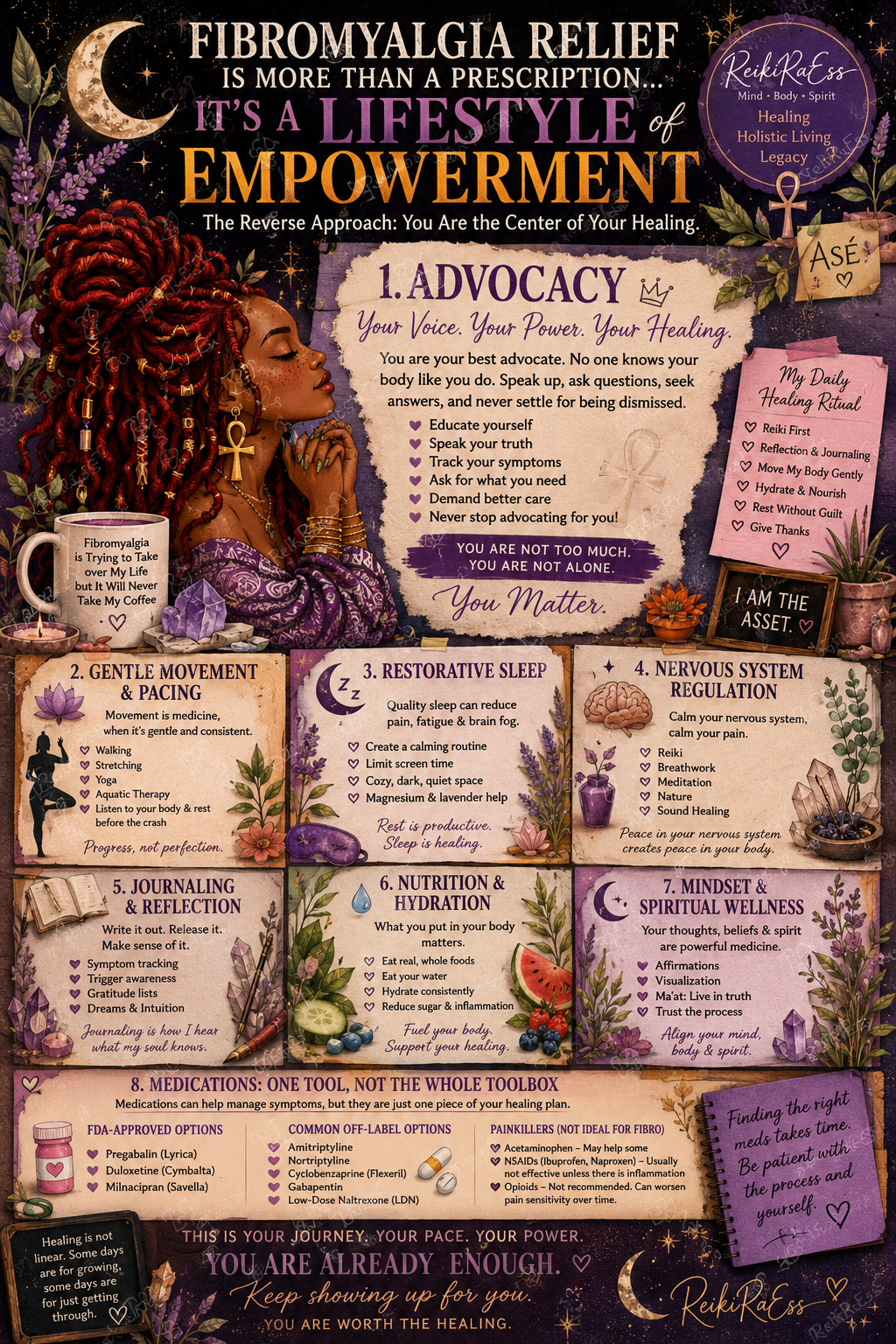
For people living with chronic illness, advocacy is part of the treatment plan.
It means learning how to describe what you are experiencing, asking questions when something does not make sense, requesting additional testing when symptoms change, and refusing to accept dismissal as a diagnosis.
You are not being difficult because you want answers.
You are not asking for too much because you want your pain taken seriously.
You are not disrespecting a medical professional because you ask them to explain their reasoning.
Your body is your home.
You live inside it every day. Your healthcare providers may have training and clinical experience, but you have lived experience.
Both forms of knowledge belong in the room.
Fibromyalgia Should Not Become a Catch-All Explanation
One of the most difficult parts of living with fibromyalgia is that almost any symptom can be placed beneath its umbrella.
Pain? Fibromyalgia.
Fatigue? Fibromyalgia.
Pelvic discomfort? Fibromyalgia.
Numbness, burning, stiffness, poor sleep, headaches, digestive issues, or brain fog?
Fibromyalgia again.
Sometimes those symptoms are connected to fibromyalgia.
Sometimes they are not.
A fibromyalgia diagnosis should never prevent a healthcare provider from investigating new, worsening, or unusual symptoms. Chronic illness does not make us immune to developing other conditions. Yet many patients find themselves fighting to have anything examined beyond the diagnosis already written in their medical records.
Advocacy means asking:
Is this symptom consistent with my usual pattern?
What other conditions could cause this?
Is additional imaging or testing appropriate?
Could one condition be worsening another?
What should make me seek urgent care?
Can you document that I requested further evaluation?
Keeping records, tracking symptoms, saving test results, and preparing questions before appointments can help us recognize patterns that may otherwise be overlooked.
Medication Can Be a Tool Without Becoming the Whole Toolbox
Medication can help some people manage fibromyalgia pain, sleep disturbances, anxiety, depression, fatigue, or nerve sensitivity.
For others, the benefits are limited or the side effects are difficult to tolerate.
Finding the right medication may involve months or years of trial and error. What brings relief to one person may do very little for someone else.
Medication is not a personal failure, and choosing not to center medication is not a rejection of medical care. The problem begins when medication becomes the only response.
A prescription cannot replace being believed.
It cannot replace proper testing.
It cannot teach pacing, improve access to care, create emotional support, or address the stress of constantly defending your own experience.
Medication may be one tool. It should not be handed to us as though it is the entire toolbox.
My Healing Toolbox Is Built Around Support

My personal approach to fibromyalgia includes several practices that help support my body, mind, emotions, and nervous system.
Some days, that means gentle movement. Other days, it means staying still long enough to admit that my body needs rest.
My healing toolbox may include:
Self-advocacy and symptom tracking
Reiki and nervous-system support
Journaling and emotional reflection
Hydration and nourishing foods
Gentle stretching, walking, yoga, or aquatic movement
Rest without guilt
Sleep routines
Time in nature
Plants, herbs, and calming sensory rituals
Medical care and medication when appropriate
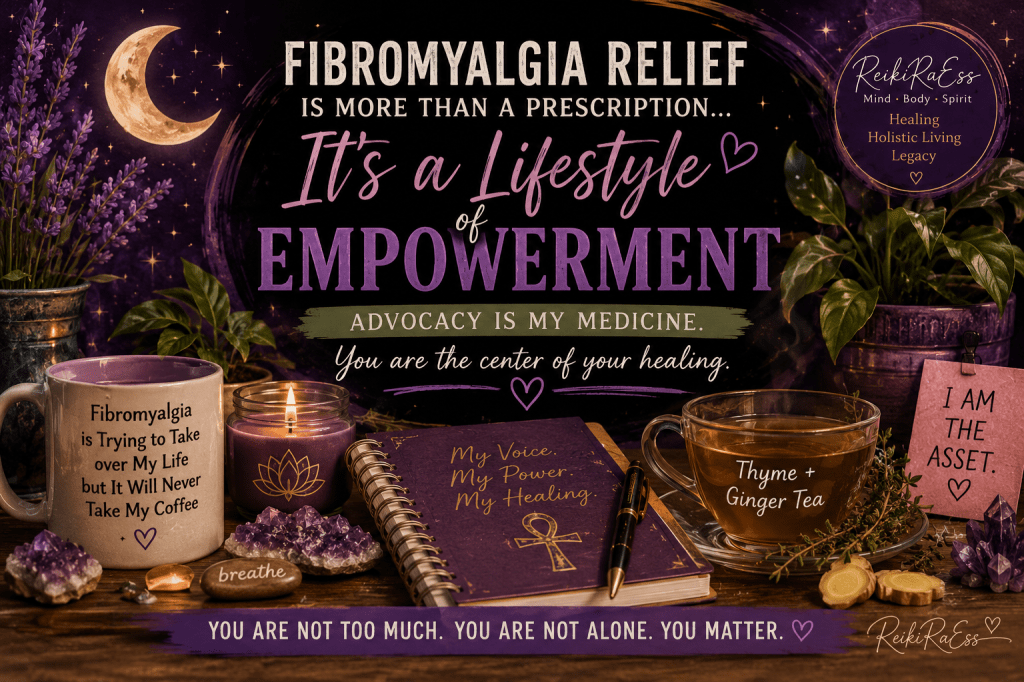
Coffee, because fibromyalgia may try to take over my life, but it will never take my coffee

The tools I use may change from day to day. That does not mean I am inconsistent. It means I am responding to the body I have today instead of forcing it to perform like the body I had yesterday.
Thyme and Ginger Tea: My Ace in the Hole
One supportive remedy I used regularly was thyme and ginger tea.
It has been a long time since I relied on it consistently, but it became one of my personal “ace in the hole” practices during painful periods.
It was not a cure. It did not permanently remove the pain, and it may not work the same way for everyone. Over time, however, I noticed that it sometimes helped take the edge off my discomfort.
The warmth of the tea helped my body relax. The ritual encouraged me to slow down. It gave me a moment to breathe, sit quietly, and care for myself before deciding what else I needed.
That distinction matters.
When I share something that helped me, I am not promising that it will heal everyone. I am documenting my lived experience.
Herbs may affect medications and medical conditions, so personal remedies should still be discussed with a qualified healthcare professional. However, it never interfered with the 10 that I was on. As a matter of fact, my practitioner ordered for some to be discontinued. ☺️
Most warn against holistic medicinal usage. Natural does not automatically mean safe for every person, every dosage, or every situation.
Apparently even plants require paperwork. 🌿
Still, our personal experiences deserve space in conversations about healing.
Rest Is Not the Same as Giving Up
People living with fibromyalgia often carry guilt about resting.
We compare what we accomplished today with what we could do before becoming ill. We may push ourselves during a “good” day, only to spend the next several days recovering from it.
Pacing asks us to stop treating energy as though it is unlimited.
- Rest is not laziness.
- Rest is not weakness.
- Rest is part of symptom management.
Sometimes the most productive decision is to complete one necessary task and leave the rest for another day.
Sometimes it is finishing the homeschool board and doing yard work, then recognizing that the body has already contributed enough.
We do not have to wait until we collapse to earn recovery.
Journaling Helps Turn Symptoms Into Information
Journaling has helped me recognize that pain is not simply an inconvenience to overcome. It is communication.
Tracking symptoms can reveal patterns involving:
- Sleep
- Stress
- Weather
- Movement
- Food
- Hydration
- Menstrual or hormonal changes
- Emotional strain
- Medication
- Activity levels
- Pain location and intensity
Journaling also creates a record that can be taken into medical appointments.
Instead of saying, “I hurt all the time,” we may be able to explain:
“The pain increases after standing for fifteen minutes, travels through this area, and is accompanied by numbness.”
That level of detail does not guarantee that we will be heard, because the healthcare system remains committed to making simple things unnecessarily exhausting. But it can help us communicate more clearly and advocate more effectively.
Reiki and Nervous-System Care
Reiki does not replace medical treatment, but it can offer a gentle way to reconnect with the body.
During a flare, it may be difficult to concentrate, complete a long ritual, or hold traditional hand positions for an extended period. Supportive care does not have to be elaborate.
A few quiet minutes may be enough.
Place your hands where they feel comfortable. Breathe slowly. Allow yourself to receive rather than perform. The goal is not to force the pain away. The intention is to create safety, stillness, and compassion around what you are experiencing.
Healing practices should not become another standard we use to judge ourselves.
- Some days we meditate.
- Some days we journal.
- Some days we make tea.
- Some days we take the medication and go back to bed.
All of these choices can belong inside a thoughtful care plan.
Your Voice Is Part of Your Treatment
Fibromyalgia treatment is often discussed as a combination of medication, exercise, sleep, and stress management.
I would add another essential element:
A patient who is informed, supported, and unafraid to speak.
Advocacy may look like bringing someone to an appointment, asking for copies of records, requesting a referral, changing providers, researching a diagnosis, documenting symptoms, or simply saying:
“This does not feel normal for me, and I need you to look deeper.”
You do not have to become a medical expert.
You do have to remain connected to your own truth.
Your healing may include prescriptions, herbs, movement, therapy, Reiki (energy healing), rest, journaling, dietary changes, specialists, and many other forms of support. None of them should require you to surrender your voice.
The Bottom Line
Fibromyalgia relief is more than a prescription.
-It is learning your body.
-It is honoring your limits.
-It is documenting changes.
-It is building a toolbox instead of waiting for one solution to rescue you.
Most importantly, it is understanding that advocacy is healthcare.
Your voice is not a side note in your medical record.
Your voice is one of the most important tools you carry.
You are not too sensitive.
You are not too complicated.
You are not asking for too much.
You deserve care that listens, investigates, explains, and supports your whole life.
☥ You are the asset. Your body is worthy of attention. Your experience matters.
Journal Prompts
- Where have I felt dismissed or unheard in my healthcare journey?
- What symptoms do I need to begin documenting more carefully?
- What questions have I been afraid to ask my healthcare provider?
- Which tools currently support me during a flare?
- What does advocating for myself look like in this season?
Affirmation
- I trust the wisdom of my body. I speak clearly, ask questions, and advocate for the care I deserve.
This post shares personal experience and general educational information. It is not medical advice, diagnosis, or a substitute for care from a qualified healthcare professional.
Related reading: Fibromyalgia Is Trying to Take Over My Life but It Will Never Take My Coffee by La Trecia Doyle. ☕🪻✨🧘🏿♀️🪴
 Something Nubian
Leave a comment