
By LaTrecia
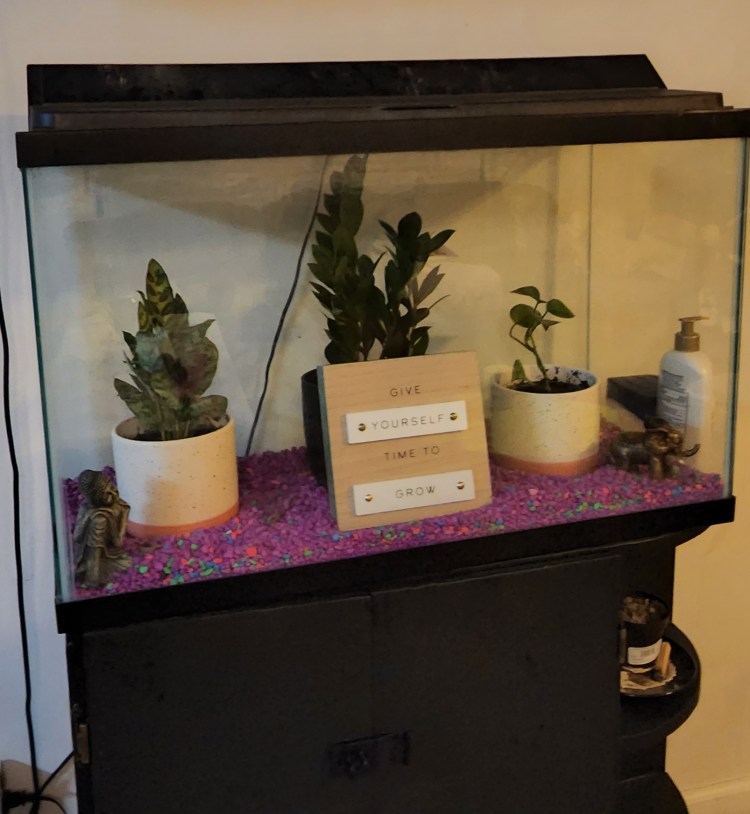
Terrariums are a great way to bring a little bit of nature into your home, and they’re relatively easy to create and care for. They’re perfect for people who live in small spaces or who want to add a touch of greenery to your home without taking up too much space. One plant that does particularly well in terrariums is the rattlesnake plant, also known as Calathea lancifolia.
In this blog post, we’ll go over how to create a home terrarium and which plants will grow best with rattlesnake plant. This was project that was part of our homeschool assignment.
Teaching children about houseplants is a great way to introduce them to the world of nature and gardening. We chose easy to care for plants to increase motivation. But first we had to find the container that was suitable for our house.
Choosing the Right Container
The first step in creating a home terrarium is to choose the right container. Terrariums can be made in a variety of containers, including glass jars, vases, and even fish tanks. When choosing a container, make sure it has a lid or cover to help retain moisture inside. The container should also be clear, so you can see the plants inside. A good rule of thumb is to choose a container that’s at least three times as tall as the plants you plan to use.
Choosing the Right Plants
When it comes to choosing plants for your terrarium, there are a few things to keep in mind. First, choose plants that are small enough to fit in your container. Second, choose plants that have similar light and water requirements. Third, choose plants that are appropriate for the size of your container. Rattlesnake plant is a great choice for a terrarium because it doesn’t get too big and it likes the humid environment that a terrarium provides. Other plants that do well in terrariums include ferns, mosses, and succulents.
Assembling The Terrarium
Once you’ve chosen your container and plants, it’s time to assemble your terrarium. Start by adding a layer of gravel or small rocks to the bottom of your container. This will help with drainage and prevent the soil from becoming waterlogged. Next, add a layer of activated charcoal. This will help absorb any odors and keep the soil fresh. Finally, add a layer of potting soil, making sure it’s level and free of any clumps.
Now it’s time to add your plants. Start with the largest plants first, and then add the smaller ones around them. Make sure to leave enough space between the plants so they have room to grow. Once your plants are in place, add a layer of moss or small rocks on top of the soil to help retain moisture.
Caring for Your Terrarium
One of the benefits of a terrarium is that it’s relatively easy to care for. The enclosed environment creates a humid atmosphere that helps to keep the plants healthy. However, there are a few things you can do to ensure your terrarium thrives. First, make sure your terrarium is in a location that receives indirect sunlight. Too much direct sunlight can cause the plants to overheat and dry out. Second, water your terrarium sparingly. Overwatering can lead to root rot, so make sure the soil is slightly dry before watering. Finally, make sure to clean your terrarium periodically. Remove any dead leaves or debris and wipe down the inside of the container to prevent mold growth.
Finally, creating a home terrarium with rattlesnake plant is a great way to add a touch of greenery to your home decor. With a little bit of planning and care, you can create a beautiful and low-maintenance terrarium that will bring joy and beauty to your home.
I hope this helps someone, sending positive energy.
 Something Nubian
Leave a comment